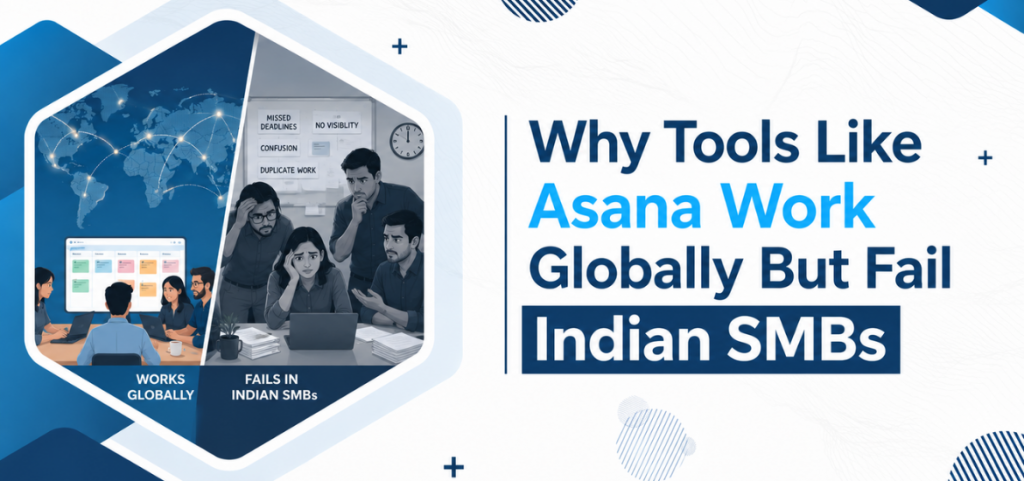
Globally successful project management tools like Asana, Trello, and Jira are exceptionally well-designed platforms. High-performing organizations across the world trust them completely. Yet, these same tools consistently struggle to gain deep adoption within Indian SMBs.
The issue has nothing to do with product quality or feature depth. The real problem lies in a fundamental mismatch: software can be universal, but workflows are not. Global platforms expect rigid, pre-planned processes. Indian businesses thrive on fast-paced, fluid communication. When you force a structured tool onto an unstructured environment, friction wins every time. Here is why global software fails our local context.
The Assumption Most Tools are Built On
Global work management platforms like Asana, Trello, and Jira are brilliant pieces of software. They dominate the tech world for a reason. However, they are built on a specific, Western-centric assumption: that your organization already operates like a well-oiled factory.
These tools assume a highly structured operating model. They expect that you define your processes clearly, document every single task before anyone starts working on it, and maintain a rigid discipline when updating the system.
This model works flawlessly in environments where roles are strictly pigeonholed and execution follows predictable, linear patterns. In those corporate cultures, logging a sub-task feels natural. The software merely enhances existing visibility.
But this design relies entirely on the user changing their behavior to feed the system. It assumes that employees have the time and training to manage the tool, rather than just doing the actual work. For a structured, corporate environment, it’s a dream. For a fast-moving, fluid business, it is an immediate roadblock.
The Ground Reality of Indian SMBs
Walk into a typical Indian small or mid-sized business, and work rarely follows a neat, predefined workflow. It moves through conversations. A manager explains a task during a quick call. A client sends a change on WhatsApp. Someone walks over to a colleague and asks them to handle something urgently. Priorities can change within hours based on a customer request, payment issue, or an operational problem. Teams adapt quickly and get the work done. But they do not always stop to create a task, document every instruction, or update a project management system.
In many Indian SMBs, communication drives execution. Teams often document work after completing it, if they document it at all. Employees share progress through calls, messages, and quick verbal updates. Managers keep track of priorities through regular follow-ups. This approach keeps businesses moving fast, but it also creates an unstructured workflow. And that is where tools built around predefined processes start to feel disconnected from how these teams actually work.
Where the Mismatch Begins
The problem starts when a business tries to place a highly structured tool on top of this communication-driven way of working.
Suddenly, employees need to turn every conversation into a task manually. They must add details, assign an owner, set a deadline, select the right project, and keep updating the status as work moves forward. The actual task may take ten minutes, but managing it inside the tool adds another step to the process.
That extra step creates friction. At first, teams try to follow the system. But when work gets busy, manual updates are often the first thing they skip. A task gets completed but still appears “in progress.” A new request stays buried in WhatsApp because nobody adds it to the tool. Managers soon stop trusting the dashboard and return to calls and follow-ups for updates.
The software still works exactly as designed. The team is still getting work done. But the tool and the actual work slowly become two separate realities.
The Illusion of Implementation Failure
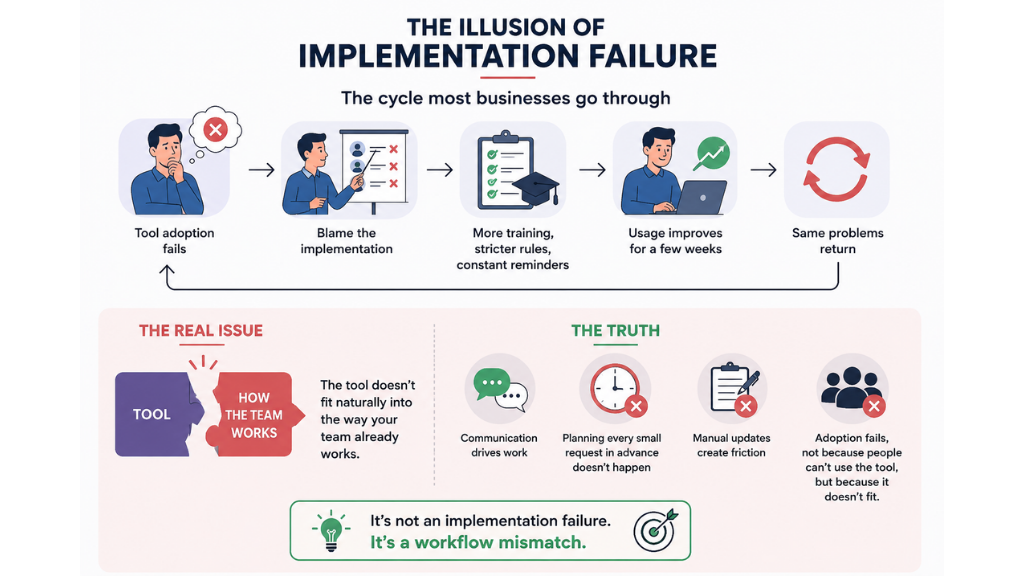
When a project management tool fails to gain traction, businesses often blame the implementation. Managers assume employees are not disciplined enough to update tasks. They schedule more training sessions, create stricter rules, and repeatedly remind teams to use the software. Some businesses even assign a person to check whether everyone has updated their tasks.
For a few weeks, usage improves. Then the same problems return. This creates the impression that the team is resistant to change or simply not ready for a structured system. But that conclusion misses the real problem.
If a tool requires employees to change how they communicate, plan every small request in advance, and manually record every update, consistent adoption will always be difficult. More training cannot remove that friction. Neither can constant reminders. The issue is not whether employees can use the tool. Most of them can. The real question is whether the tool fits naturally into how they already work. When it does not, an adoption problem can easily look like an implementation failure.
Communication vs System-Driven Work
At its core, this problem boils down to a clash between two completely different operating models: system-driven work and communication-driven work.
| Operating Model | System-Driven (Global Corp) | Communication-Driven (Indian SMB) |
| How work starts | Pre-planned and logged in software | Emerges naturally from live conversations |
| Task creation | Created before execution | Handled in real time, documented later |
| Workflows | Rigid, predefined, and linear | Highly fluid, adapting instantly to changes |
| Updates | Logged manually inside the system | Shared informally via quick calls or WhatsApp |
Most global tools cater strictly to the system-driven model. They assume work only exists if it lives inside a dashboard.
But Indian SMBs run on the communication-driven model. Our speed is our superpower. We coordinate instantly, make decisions on the fly, and prioritize immediate action over filling out forms.
When you force a communication-driven team to follow a system-driven tool without any middle ground, you create massive operational friction. You are essentially asking them to slow down business execution just to satisfy a rigid piece of software.
What Indian SMBs Actually Need
Indian SMBs do not need another tool that asks them to become more disciplined overnight. They need a system that brings structure to the way they already work. If a task starts in a conversation, the system should make it easy to capture that task immediately. If a manager gives an instruction, assigning ownership and setting a deadline should take seconds.
Teams should not have to copy information between WhatsApp, calls, notes, and a project management dashboard just to keep everyone informed. The goal should be simple: reduce the gap between communication and execution. This also means reducing manual input. Employees should spend less time creating tasks, updating multiple fields, and maintaining complex workflows. Managers should get clear visibility into work without chasing people for updates every few hours.
Most importantly, the system should support a business as it becomes more structured. It should introduce better processes gradually without forcing teams to change how they work from day one. For Indian SMBs, the right tool should adapt to existing behavior first and bring structure naturally over time.
The Missing Layer in the Ecosystem
Today, businesses usually choose between two types of tools. On one side, they have communication tools like WhatsApp and email. These tools make conversations quick and easy, but they do not bring structure to execution. A manager can send an instruction in seconds, but that message can quickly disappear under dozens of new conversations.
On the other side, businesses have project management tools. These platforms bring structure, ownership, deadlines, and visibility. But teams must manually transfer information from conversations into the system and keep it updated.
There is a clear gap between the two. Indian SMBs need a layer that connects communication with execution. A conversation should easily become a trackable task. An instruction should have an owner and deadline without requiring a lengthy setup. Managers should see what is pending without searching through chats or constantly calling employees.
This layer does not need to replace communication or project management tools. It needs to bridge them. Because the real opportunity is not another dashboard. It is turning everyday conversations into structured, visible, and accountable work.
A Shift Already Underway
The work management industry is already starting to recognize this problem. AI is changing how modern platforms handle task creation and updates. Teams no longer need to enter every detail manually. New AI-powered systems can understand conversations and identify action items. They can also turn scattered information into structured work. Even established platforms like Asana are exploring AI-driven workflows and integrations with models such as Claude. The goal is simple. Reduce the manual effort needed to keep a project management system useful and accurate.
This shift challenges a long-standing idea about work management. Employees should not have to constantly feed information into a system. Technology can now understand context and capture work as it happens. Teams can focus on execution instead of stopping frequently to update a dashboard. This change is especially relevant for Indian SMBs. Their work already starts through conversations and quick decisions. The future of work management will not ask teams to communicate less. It will make systems smart enough to turn everyday conversations into clear, structured, and trackable work.
Where TaskOPad Fits
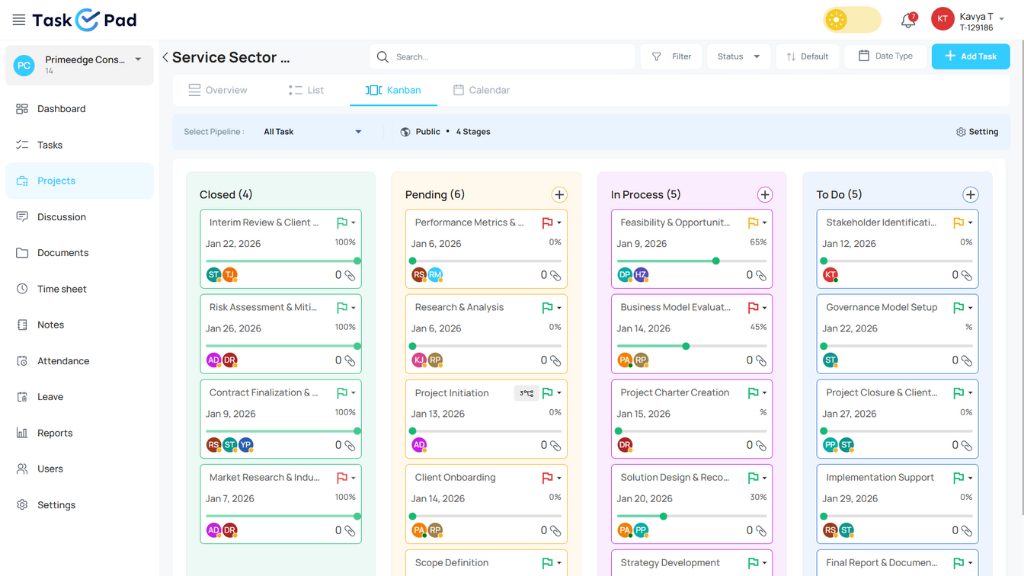
This is exactly where TaskOPad fits. We did not build TaskOPad for corporate factories; we built it specifically for the fast-paced, communication-driven reality of Indian SMBs. Our platform bridges the gap between how your team talks and how they execute. Instead of forcing your employees to adapt to a rigid, foreign workflow, TaskOPad adapts to them. It allows you to convert messy, everyday conversations into clear, trackable tasks in a matter of seconds. You can assign ownership and set hard deadlines without any friction or complex menu diving.
Your team gets to maintain their natural agility, while you get complete operational visibility. Managers no longer need to micromanage, send constant reminders, or chase people down over WhatsApp for simple status updates. TaskOPad gives your business the structure it needs to scale without killing the fast-moving culture that makes it successful.
The Real Takeaway
Tools like Asana, Trello, and Jira are not bad products. They work extremely well for the organizations and operating models they were designed to support. The problem starts when Indian SMBs try to force the same model onto teams that work differently. Indian businesses move fast. Conversations drive decisions. Priorities change quickly, and teams often start execution before anyone documents the task. A work management tool should support this reality instead of creating more steps around it.
The future of work management is not about adding more dashboards, fields, or complex workflows. It is about reducing the distance between an instruction and its execution. The right system should adapt to how teams work, remove unnecessary friction, and bring structure naturally.
That is the approach behind TaskOPad. If your team is tired of chasing tasks across calls, chats, and endless follow-ups, it may be time for a different approach. Sign up for TaskOPad today or book a free demo to see how it fits your workflow.