For many growing businesses, meetings become the default way to manage work. You schedule a meeting to discuss a problem. You add another to align teams. You gather again just to get a status update.
This feels like structure, but it actually signals a deeper issue. An over-reliance on meetings proves you lack a reliable execution system. Meetings do not drive real progress. They simply compensate for a lack of it.
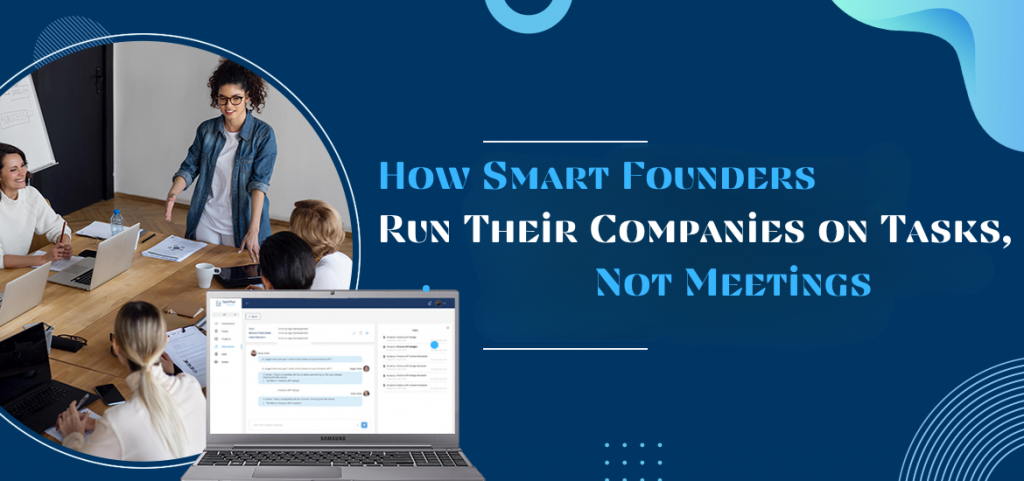
Smart founders run their companies differently. They do not manage through endless discussion. They build systems where tasks, not long conversations, drive the entire business forward.
The Hidden Cost of Meeting-driven Organizations
Meetings aren’t inherently bad. They work well for quick decisions and strategic alignment. However, using meetings as your primary management tool quietly drains your company’s productivity.
In meeting-heavy cultures, execution often stalls. Teams waste hours talking about work instead of doing it. Decisions vanish without systematic tracking. Ownership becomes vague, and leaders rely on verbal updates instead of objective data.
This reliance on discussion creates a frustrating cycle. Your team spends more time coordinating work than executing it. Productivity fractures across calendar invites. Execution slows down, even though everyone works harder. The problem isn’t the meetings. The problem is using meetings as a substitute for a real system.
Why Meetings Scale Poorly
Early on, meetings just work when the team is small, communication is direct, and coordination is simple. You gather in a room, make a choice, and execute immediately.
But growth changes everything. As you scale, you add stakeholders, team dependencies multiply, and alignment costs skyrocket. To keep up, you schedule more frequent meetings and endure longer discussions. Suddenly, coordination overhead swallows your day.
At scale, meetings create massive friction. They shatter deep work, delay critical decisions, and trap your team in synchronous communication. Progress stalls because work can only move forward when everyone is free at the exact same time. You cannot scale a business if execution requires constant, real-time presence.
The Shift to Task-driven Execution
High-performing companies do not rely on meetings to keep work moving. They rely on systems built around tasks. They do not manage execution through endless discussions. Instead, they capture work in a structured way. They establish clear ownership, firm deadlines, and measurable progress.
In a task-driven organization, every action item becomes visible. Every single task stays trackable. Teams know exactly what needs to happen. They know who owns the assignment, and they know when it is due. Work continues moving forward constantly. Nobody waits for another meeting, a follow-up call, or a manual status update. This approach reduces confusion. It removes unnecessary coordination overhead. Ultimately, it helps teams focus heavily on execution instead of endless communication.
Task-driven execution also enables highly effective asynchronous work. Employees do not need to be online at the exact same time to make real progress. Meetings still happen occasionally, but they serve a strict, specific purpose. Teams use them for fast decision-making or long-term strategic planning. Day-to-day execution happens entirely through tasks, not through random conversations. That fundamental shift creates much faster execution. It builds better team accountability, and it delivers a far more scalable way to operate your business.
What Changes When You Move from Meetings to Tasks
The transition from meeting-driven to task-driven execution fundamentally changes how your business operates. It shifts your company culture from talking about work to actually executing it.
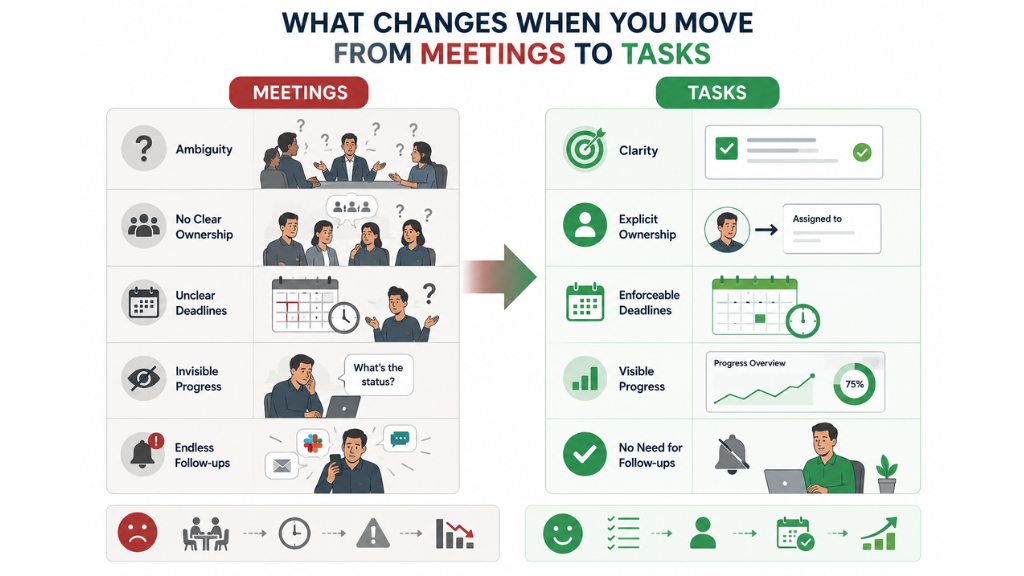
- Clarity replaces ambiguity: You no longer debate what needs to happen next. Instead, you define tasks with specific, actionable outcomes. Everyone knows exactly what done looks like. Nobody leaves a discussion guessing at the next steps.
- Ownership becomes explicit: Group assignments invite failure. When everyone is responsible, nobody is. In a task-first system, you assign every task to a single person. This clear responsibility eliminates confusion, blame, and finger-pointing.
- Deadlines become enforceable: Work no longer floats around in limbo. You tie every single action item to a definitive timeline. This simple constraint builds a natural culture of accountability across your entire team.
- Progress becomes visible: You don’t need to schedule status meetings just to see what is happening. Leaders track execution in real time through the system. You get accurate data without relying on biased verbal updates or frustrating micromanagement.
- Follow-ups become unnecessary: The system itself ensures that work moves forward. Automated alerts and clear dashboards replace constant Slack nudges, emails, and chasing people down for answers.
Ultimately, this structural shift reduces the cognitive load across your entire organization. Your team stops wasting precious mental energy on complex coordination. They channel that focus entirely into doing the actual work.
The Operating Model of Smart Founders
Founders who successfully scale their businesses do not manage through constant, personal involvement. They do not spend their days babysitting calendars or micro-managing teams. Instead, they design reliable systems that allow execution to happen independently.
Their operational playbook relies on a few non-negotiable principles:
1. They convert discussions into tasks
Smart founders do not let ideas stay inside meetings, chats, or calls. They turn every important discussion into clear, actionable tasks. Each task includes an owner, deadline, and expected outcome. This prevents work from getting lost and creates accountability across the team.
2. They reduce dependency on meetings
High-performing founders do not expect teams to stay online together all day to make progress. They build systems that support asynchronous work. Employees update tasks directly, track progress in real time, and move projects forward without waiting for another meeting or follow-up call.
3. They track execution through systems
Smart founders do not spend their day asking for updates. Instead, they rely on systems that provide real-time visibility into execution. They can quickly see completed work, pending tasks, blockers, and deadlines without scheduling constant status meetings. This reduces micromanagement and saves time across the organization.
4. They remove decision bottlenecks
As companies grow, slow decision-making becomes a major problem. Smart founders solve this by defining ownership clearly. Teams know who is responsible for each task and decision. This reduces unnecessary approvals and helps work move faster.
5. They eliminate redundant communication
Structured execution reduces repeated discussions, endless follow-ups, and unnecessary meetings. Teams spend less time coordinating work and more time completing it. This creates a company that can scale efficiently without depending on the founder’s constant involvement.
Implementation: Moving Toward a Task-first System
Transitioning away from a meeting-heavy culture requires deliberate system design. You cannot just delete calendar invites. You cannot just hope for the best. You must build a task-first workflow. Use these five practical steps to change how your team works.
- Step 1: Audit your meetings. Look at your calendar. Categorize every recurring meeting. Separate them into decision-driven, alignment-driven, or execution-driven sessions. Keep the decision meetings. Make alignment optional. Completely eliminate execution updates. Task tracking easily replaces them.
- Step 2: Capture work systematically. Create a single source of truth. Record every piece of work. Track items from phone calls, emails, or Slack messages. Turn them all into formal tasks. If your team does not document it, the work does not exist.
- Step 3: Define ownership and deadlines. Never assign an action item to a group. Never assign it to a whole department. Assign every task to one individual. Add a definitive due date. This simple rule establishes clear accountability from day one.
- Step 4: Build visibility. Move your workflows into a central dashboard. Anyone should be able to track progress at a glance. When everyone sees task statuses in real time, you kill the need for manual check-ins. You stop repetitive follow-up emails.
- Step 5: Reduce meetings progressively. Do not shock the system. Do not cancel everything at once. Let your team populate the task manager first. Build trust in the data. Then, gradually phase out the remaining status meetings.
This phased approach protects focus. It frees up hours for deep work. It builds a sustainable engine for execution.
The Role of Tools In Enabling This Shift
Mindset matters, but companies cannot scale execution without the right tools. If teams still depend on chats, spreadsheets, and scattered notes, work quickly becomes disorganized. Tasks get lost. Follow-ups increase. Leaders lose visibility into progress.
The right tool makes task-driven execution easier and more consistent. Teams can capture work quickly, assign ownership clearly, and track progress in real time. Employees spend less time managing communication and more time completing meaningful work.
Many traditional project management tools create friction. They often require rigid workflows, complex setups, and constant manual updates. Fast-moving teams need something simpler and easier to adopt. The system should fit naturally into daily workflows instead of adding more operational overhead.
A good execution tool should support quick task creation, simple updates, and clear visibility across teams. It should reduce dependency on meetings, not create more complexity.
When teams use the right system, accountability improves. Coordination becomes easier. Execution moves faster. Most importantly, businesses can scale operations without increasing communication chaos.
Where TaskOPad Fits
TaskOPad serves as the lightweight execution layer your business needs to transition from meeting-driven chaos to task-driven clarity. It bridges the gap between fast-moving discussions and structured execution without adding software bloat.
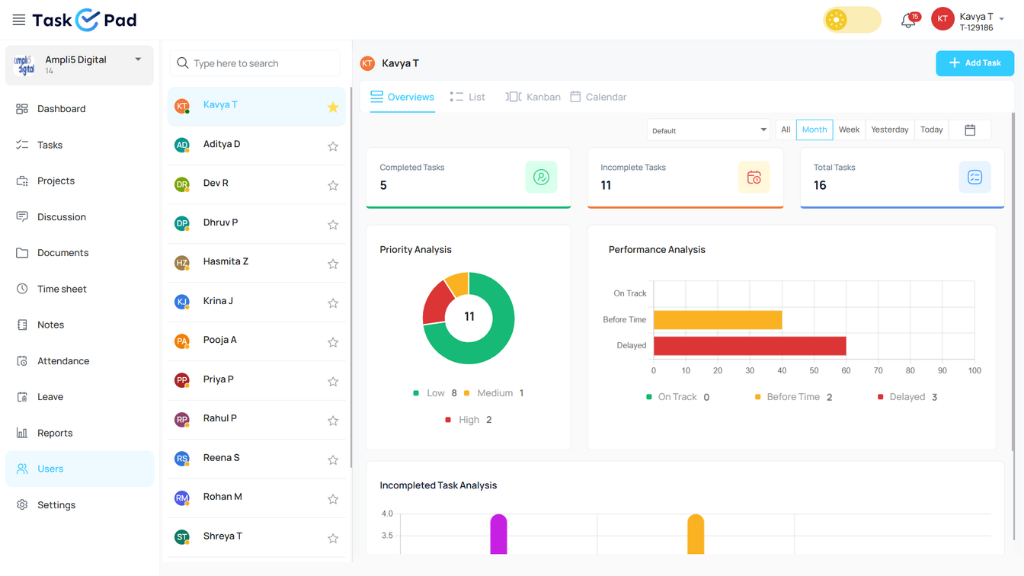
With TaskOPad, your team converts text threads, emails, and stray thoughts into structured tasks instantly. You assign single ownership and firm deadlines in just a few clicks. The platform creates an open, real-time map of your entire operation. Everyone sees exactly who owns what and when it is due.
By using TaskOPad, you eliminate the need for daily status updates and micro-management calls. Progress tracks itself automatically inside the system. This structural shift drastically cuts down your team’s communication overhead. It improves daily operational efficiency and allows your business to scale execution smoothly without multiplying your meeting count.
The Real Measure of Operational Maturity
Operational maturity has nothing to do with how often your team meets. It has everything to do with how effectively work gets done without constant coordination.
Many leaders view a packed calendar as a sign of collaboration or momentum. In reality, a heavy reliance on meetings exposes a structural failure. It shows that the organization lacks a dependable system. These teams must constantly huddle just to figure out what to do next.
True operational maturity means you build reliable systems. When you build a system around clear tasks, your business gains the ability to execute consistently, scale efficiently, and operate with absolute clarity. The machine runs smoothly because the structure drives the workflow, not the founder’s constant intervention. You measure maturity by output and autonomy, never by the number of calendar invites your team sends.
The Long-term Advantage
As your business grows, time becomes your most constrained resource. This is especially true for founders and leadership teams. Dropping unnecessary meetings does not just give you back a few hours. It builds a massive competitive edge.
When you clear the calendar chaos, you create vital space. You get the room you need for high-level strategic thinking, major decision-making, and long-term planning. More importantly, a task-first system teaches your teams to operate independently. True scaling requires autonomy, not constant oversight. You build a company that runs smoothly even when you walk away from the screen.
Stop burning valuable hours in empty discussions. Turn your conversations into execution today.
Ready to transform your workflow?Sign up for TaskOPad right now orbook your free TaskOPad demo to see task-driven execution in action.