Every project begins with a goal, whether that is launching a new product, improving internal operations, or delivering work for a client. However, reaching that goal successfully requires more than effort alone. Without a clear plan and defined process, projects can quickly face delays, rising costs, missed deadlines, and communication gaps between teams.
A structured approach helps businesses manage each stage more effectively, from the initial concept through to final delivery. With clear phases in place, teams can improve planning, maintain accountability, and keep progress on track. In this guide, we break down the five phases of project management and explain how each one contributes to better results.
What is a Project Life Cycle?
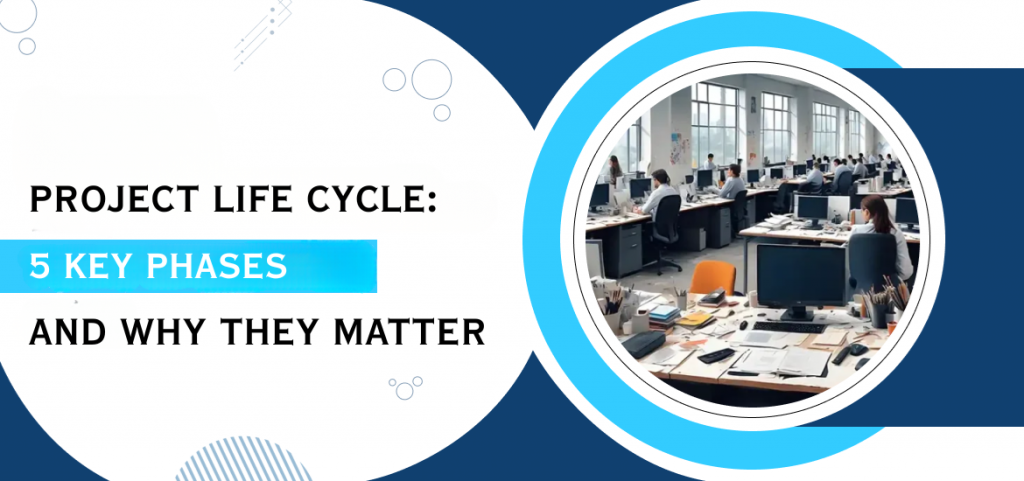
A project life cycle is the step-by-step process a project follows from start to finish. It provides a clear structure for managing work through defined stages, helping teams stay organised, meet deadlines, and deliver results more efficiently.
Instead of handling a project as one large task, the work is divided into manageable phases. Each stage focuses on a specific objective, from setting goals and planning resources to executing tasks and reviewing outcomes.
This structured approach is used across all types of businesses and industries because it improves visibility, reduces risk, and keeps projects aligned with their intended goals. In most cases, the lifecycle includes five core phases: initiation, planning, execution, monitoring and control, and closure.
Why the Project Management Life Cycle Matters
Managing a project often involves coordinating deadlines, budgets, people, and priorities at the same time. Without a clear process in place, even well-planned projects can face delays, miscommunication, and unnecessary costs. A structured lifecycle helps businesses stay organised and maintain better control from start to finish.
Improves Planning Accuracy: Defined stages make it easier to build realistic timelines, allocate resources properly, and set achievable milestones before work begins.
Creates Accountability Across Teams: When responsibilities are clearly assigned, team members understand their role and what is expected at each stage of the project.
Helps Control Budgets and Timelines: Regular progress reviews help identify delays or overspending early, allowing corrective action before problems escalate.
Reduces Operational Risks: Potential issues can be recognised in advance, helping teams respond quickly and minimise disruption.
Keeps Deliverables Aligned with Goals: A structured approach keeps the project focused on outcomes that support wider business objectives rather than drifting off course.
For businesses aiming to strengthen planning and execution, adopting a structured approach supported by reliable project management software can significantly improve overall efficiency.
5 Phases of the Project Management Life Cycle
Every successful project follows a clear process from start to finish. While the scope and complexity may vary, most projects move through five key phases that help teams stay organised, manage resources effectively, and deliver results on time.
Understanding these stages allows businesses to reduce uncertainty, improve coordination, and keep progress aligned with project goals.
Phase 1: Project Initiation
The initiation phase is where the project idea is reviewed and formally introduced. At this stage, businesses identify the purpose of the project, expected outcomes, and whether the work is practical to pursue.
This phase helps decision-makers confirm that the project is worthwhile before time and resources are committed.
Key activities during initiation often include:
- Defining project goals
- Assessing feasibility
- Identifying key stakeholders
- Setting initial scope
- Securing approvals
A strong start creates clarity for everyone involved and lays the foundation for smoother delivery.
Phase 2: Project Planning
Once approved, the next step is creating a detailed execution plan. Planning is often the most important phase because it shapes how the project will be managed day to day.
Teams use this stage to establish timelines, assign responsibilities, estimate costs, and prepare for possible risks.
Typical planning activities include:
- Creating schedules and milestones
- Allocating resources
- Estimating budgets
- Breaking work into tasks
- Identifying risks
- Setting communication plans
Projects with thorough planning are usually easier to control and less likely to face avoidable delays.
Phase 3: Project Execution
Execution is the stage where planned work begins. Teams start carrying out tasks, coordinating across departments, and progressing towards agreed deliverables.
Managers focus on maintaining momentum, solving issues quickly, and ensuring priorities remain clear throughout the process.
Common activities during execution include:
- Delivering assigned tasks
- Managing team coordination
- Sharing progress updates
- Resolving day-to-day issues
- Completing milestones
Strong communication and clear accountability are especially important during this phase.
Phase 4: Project Monitoring and Control
As work progresses, performance needs to be measured consistently. The monitoring and control phase ensures the project remains on schedule, within budget, and aligned with expectations.
If delays, scope changes, or resource issues arise, managers can respond early before problems grow larger.
Typical activities include:
- Tracking progress against deadlines
- Reviewing workloads and KPIs
- Resolving blockers
- Managing changes in scope
- Updating stakeholders
- Maintaining delivery standards
This phase gives businesses the visibility needed to keep projects moving in the right direction. For better visibility and control during this stage, many teams rely on dedicated project tracking software to monitor progress and identify issues early.
Phase 5: Project Closure
Closure is the final stage where the project is formally completed. Once deliverables are handed over, teams review performance and record learnings that can improve future projects.
This phase is often overlooked, but it plays an important role in continuous improvement.
Typical closure activities include:
- Finalising deliverables
- Securing approvals and sign-off
- Closing budgets and reports
- Reviewing project outcomes
- Documenting lessons learned
A well-managed closure helps businesses build stronger processes for the next project.
Common Challenges at Each Project Management Stage
Knowing where problems typically occur allows project managers to prepare mitigation strategies in advance rather than reacting when it is too late.
| Phase | Common Challenge | How to Mitigate |
| Initiation | Unclear or conflicting project goals from stakeholders | Run a structured stakeholder alignment session before drafting the Project Charter |
| Planning | Unrealistic timelines due to optimism bias | Use historical data and team input for estimates; add buffer to high-risk tasks |
| Execution | Communication breakdowns between departments | Centralise task updates in a single platform; establish a clear escalation path |
| Monitoring & Control | Delays going undetected until they cascade | Set up automated deadline alerts and weekly progress reviews with mandatory status updates |
| Closure | Lessons learned skipped due to time pressure | Schedule the retrospective as a mandatory project activity before the final invoice is raised |
Addressing these challenges often requires a combination of structured processes and practical strategies, which are further explored in this guide on project management hacks to master each stage.
How TaskOPad Supports the Full Project Life Cycle
As projects become more complex, relying on spreadsheets, emails, or disconnected systems can make management harder than it needs to be. Using the right tools helps businesses stay organised, improve accountability, and maintain better control across every phase.
Clear Ownership of Tasks
Every task should have a clear owner, priority level, and due date. This reduces confusion and ensures responsibilities are understood across the team.
Centralised Planning
Keeping project plans, timelines, task lists, and updates in one place makes coordination far easier. Many businesses use to create a more structured and efficient workflow.
Deadline Tracking
Shared schedules, automated reminders, and deadline visibility help teams stay on track and reduce the risk of missed milestones.
Team Collaboration
Projects run more smoothly when teams can communicate, share updates, and manage work within one connected platform instead of scattered channels.
Progress Dashboards
Real-time dashboards help managers review completed tasks, pending work, overdue items, and overall project status at a glance.
Reports and Accountability
Performance reports provide useful insights into productivity, bottlenecks, and team output, helping leaders make better decisions.
For businesses that need stronger day-to-day control over responsibilities and workloads, a dedicated tool can improve visibility and accountability across teams.
Conclusion
The project life cycle gives teams a clear way to move from idea to delivery without losing control along the way. When each phase is managed properly, it becomes easier to plan work, track progress, and handle challenges before they impact results.
As projects grow in complexity, having the right system in place makes a noticeable difference. If you’re looking to improve how your team manages tasks, timelines, and responsibilities, get in touch with TaskOPad to see how it can support your workflow and help you stay on top of every stage of the project.
Start your free 15-day trial or book a demo to see how it works.
Frequently Asked Questions
Is the project life cycle the same for every industry?
The core phases remain the same, but how they are applied can vary. Industries like construction, IT, and marketing may adapt the process based on project requirements, timelines, and workflows.
How long does each phase of the project life cycle usually take?
The duration of each phase depends on the project’s size and complexity. Smaller projects may move quickly through phases, while larger projects can spend significant time in planning and monitoring to ensure accuracy and control.
What tools are commonly used to manage the project life cycle?
Teams often use project management tools, task trackers, and collaboration platforms to organise work, track progress, and manage deadlines.
Why is the monitoring phase often underestimated?
Monitoring is sometimes treated as a passive activity, but it requires continuous evaluation and active decision-making. Weak monitoring can allow small issues to grow into major problems.
What is the role of a project manager in each stage of the project life cycle?
A project manager defines goals during initiation, creates plans in the planning phase, coordinates tasks during execution, tracks performance in monitoring, and reviews outcomes during closure.
How do the phases of project management improve project outcomes?
They create a structured process that helps manage tasks, track progress, reduce risks, and keep the project aligned with its objectives at every stage.