You often hear them together, but in the world of work, efficiency and effectiveness are not interchangeable, they are two sides of the same critical coin. Getting them mixed up is a common mistake that can cost your team time, resources, and missed opportunities. Do you want to save time, or do you want to achieve your goals? The answer is both!
Here, we’ll dive deep into the definitions of work efficiency and work effectiveness, highlight the key differences between them, and, most importantly, show you a practical path to balancing both for optimal performance. Finally, we’ll explore the vital role of a project management system in turning this balance into a consistent reality for your team.
Work Effectiveness
Work Effectiveness is fundamentally about doing the right things. It measures the degree to which a stated goal or objective is achieved. In essence, if you are focusing on making your business productive and successful, you are prioritizing effectiveness.
A company, regardless of its industry or size, cannot achieve sustainable success without an effective workflow. This concept is goal-oriented: it’s about taking the necessary, strategic steps toward completing the right tasks.
Visualizing Effectiveness: You can think of effectiveness as your project’s To-Do List. Every item on that list is a tangible step leading toward a final objective. At the end of the day or project, your effectiveness is measured by how many of the right items you were able to check off. By ensuring employees and team members focus on the tasks aligned with the overarching goal, you guarantee that their efforts are productive. A team task management tool, like TaskOPad, remains essential here, providing real-time visibility into pending and completed tasks to keep the team focused on the correct priorities.
To ensure Work Effectiveness on any project, you or your team members should consistently ask the following goal-setting questions:
- What is the definitive, final goal we are trying to achieve?
- Which specific tasks and steps are absolutely required to reach this goal?
- Are we currently performing any actions that are diverting us away from our main objective?
- Are there any alternative approaches that would lead us to the goal more reliably or comprehensively?
Answering these questions clearly sets the criteria for work effectiveness. Ultimately, your team’s effectiveness is determined by the extent to which these goal-aligned criteria are consistently met.
Also Read – High-Impact Project Management Goals To Improve Performance
Work Efficiency
Work Efficiency is supplementary to effectiveness; it is the critical second step after the goal is defined. While effectiveness is concerned with what we accomplish (the goals), efficiency focuses on how we accomplish it.
If effectiveness is about doing the right things, efficiency is about doing those things in the right way, using the fewest possible resources, time, and effort.
Visualizing Efficiency: Let’s return to the To-Do list example. When you successfully check off all the items on your list, that demonstrates effectiveness. However, if you complete that entire list in the shortest possible time and with the minimal amount of effort or expense, you have achieved efficiency.
Efficiency requires a keen focus on strategy, resource allocation, and continuous process optimization across all projects. This is where a robust and user-friendly project management software, becomes indispensable. It allows you to track progress, monitor resource usage, and streamline the path toward faster, more economical goal completion.
To ensure Work Efficiency within your team, you should regularly address the following operational questions:
- Which tasks must be highly prioritized to minimize dependencies and bottlenecks?
- Are there any means by which we can reduce the financial expenditure on this project without compromising quality?
- Can a project management system automate steps or provide tools to accomplish tasks faster?
- Is there an opportunity to handle parallel tasks simultaneously or batch similar work for time savings?
Simply put, optimizing work efficiency is about maximizing output while minimizing input. A great project management system is essential for achieving this high level of productivity and paving the way to a better balance.
Balancing Work Effectiveness & Efficiency- Role of Task Management Software

Productivity remains at the intersection of work effectiveness and efficiency. We cannot consider it productivity even if you have accomplished overall goals after wasting a lot of time and money. With this, productivity cannot come at the cost of quality and performance.
Here, task management software comes into the picture. It can blur the boundaries of work effectiveness and efficiency. When the entire team remains on the same page and tracks the progress of one another, it enhances efficiency and productivity. With the right task management software, you can take efficiency to a new level and boost effectiveness in the business model.
Four Effective Ways Project Management System can Increase Efficiency
A feature-rich project management system can save a lot of time and effort for team members. Here are the top four ways it can increase the employee’s efficiency.
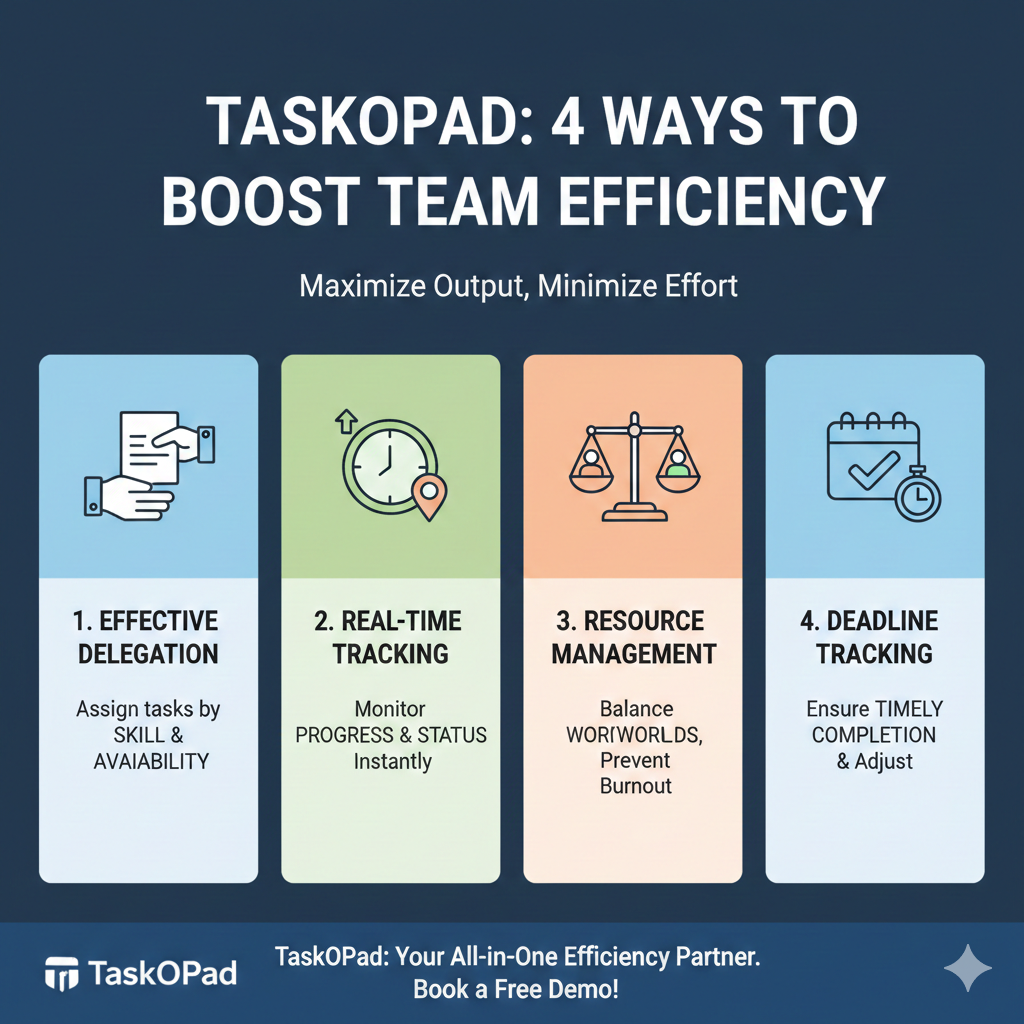
1. Effective Delegation
A project management tool can assist project managers to delegate tasks effectively as per the team members’ skills.
2. Real-time Tracking
Every team member and project manager can see the real-time status of one another and get an idea of the project’s progress.
3. Resource Management
A team task management tool can show all tasks and assignments given to all team members. It makes it possible for project managers to find which team members are free and who are overburdened.
4. Deadline Tracking
An accurate task management software can ensure the timely completion of the project while showing the tasks that need more time. You can take corrective measures if necessary.
Also Read – How to Use a Task Management System to Achieve Your Personal and Professional Goals
Striking the Balance
You now know that true productivity does not come from choosing one over the other.
- Effectiveness asks: Are we doing the right things to hit our target?
- Efficiency asks: Are we doing those things in the best possible way – fast, cheap, and without waste?
The core of business success lies at the intersection of these two concepts. You can be highly efficient at executing the wrong plan, which is failure at high speed. Conversely, you can be effective by achieving a goal but waste so much time and money that the success is unsustainable.
A powerful project management system is what blurs the boundaries and allows your team to master both simultaneously. By streamlining delegation, providing real-time tracking, and optimizing resource management, a tool like TaskOPad ensures that your team is constantly focused on the right tasks (Effectiveness) and executing them with the minimal resources (Efficiency).
Don’t settle for half the solution. Equip your team with the tools to be both effective and efficient.
Book your free demo now to see how TaskOPad can transform your workflow and turn the balance of effectiveness and efficiency into a competitive advantage for your business!