In the race to capture market share, businesses often pour immense resources into perfecting external communication like messaging aimed at customers and stakeholders. Yet, the foundation of any successful business lies within: internal communication. It is the vital, often overlooked, element that shapes company culture, boosts employee morale, and drives alignment. While reliable business team communication software can facilitate real-time interaction, true mastery requires understanding the full scope of interaction.
Here, we’ll briefly define internal communication, explore its crucial importance in shaping your business, and dive deep into the six essential types you must leverage to build a unified, productive, and high-performing workplace.
What is Internal Communication at Workplace?
IC or Internal Communication is about establishing effective, real-time communication among employees and other stakeholders within company premises.
Internal communication usually revolves around an adequate flow of information. It can improve collaboration among team members to strengthen the work environment.
Internal communication includes various interactions ranging from announcing a new policy to informing team members about upcoming projects. In this pandemic age, internal communication plays a more significant role than ever. It is also useful in celebrating team achievements and organizing an engagement event for remote employees.
Today, internal communication has not remained limited to the management and HR department. Any team or department can use it across the organization.
Every enterprise can leverage its benefits with the help of team communication software for enhancing productivity, efficiency, and engagement of employees.
Let’s go through different types of internal communication.
Six Types of Internal Communication in Modern Enterprises
1. Top-down Communication (Management to Employee)
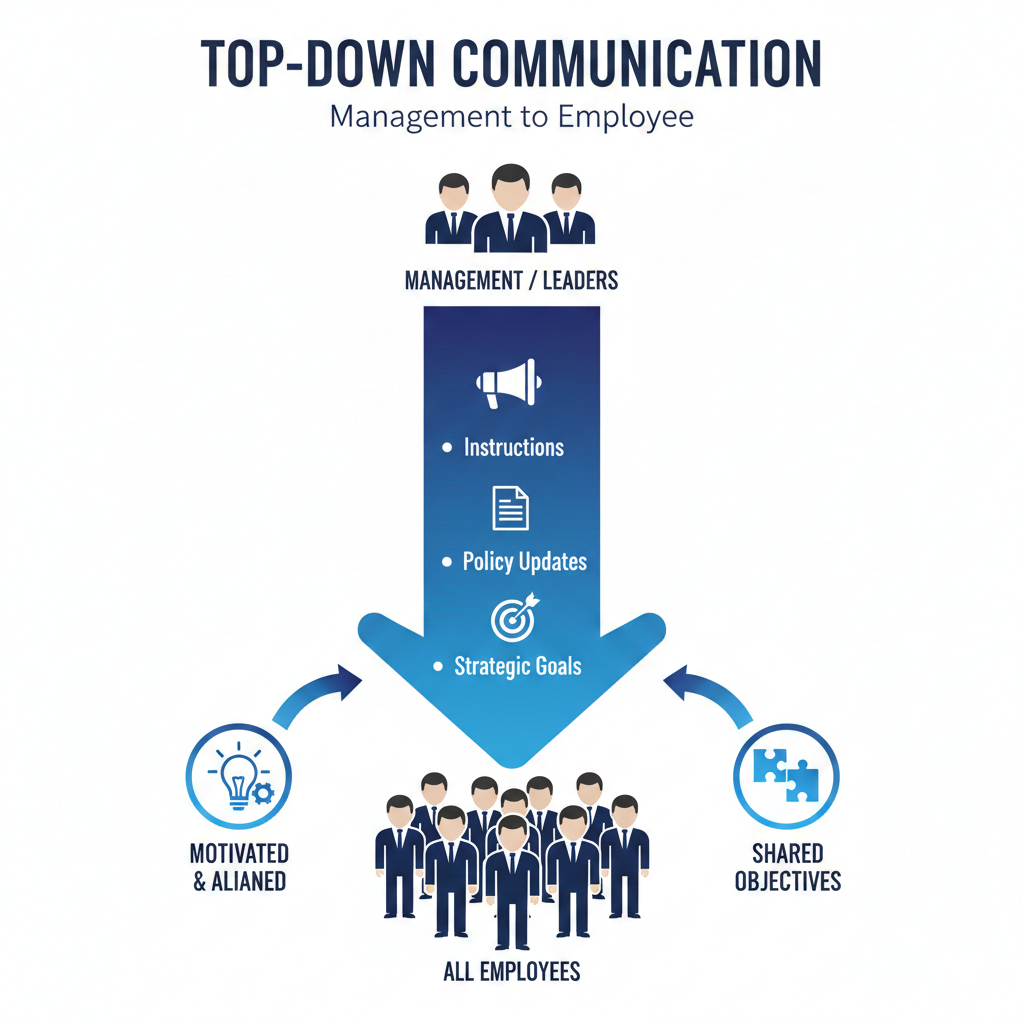
This is the foundational and most common communication flow, built upon the organizational hierarchy. It involves the systematic dissemination of essential information, instructions, and policy updates from the top level (management, leaders) down to all employees. As an effective information delivery method, top-down communication ensures every team member is fully informed about the company’s activities, strategic goals, and necessary corporate standards. This helps keep the entire workforce motivated and aligned with the same overarching goals and objectives.
2. Bottom-up Communication (Employee to Management)
The inverse of top-down, this flow travels upward in the hierarchy, from front-line employees to senior management. Bottom-up communication is collaborative and vital for organizational health, allowing employees to pass on critical feedback, suggestions, complaints, and valuable on-the-ground information. Nurturing this type of flow fosters a sense of inclusion and helps management gain practical insights, enabling them to refine business strategies and improve the employee experience.
3. Crisis Communication
As the name suggests, this type of internal communication plays a vital role in crisis management. It includes the processes, systems, and strategies that help an enterprise communicate during any sort of crisis. When an emergency comes, it is of the utmost importance that the management can share the proper information to the employees quickly, and vice versa. The Covid pandemic was one such a crisis as nobody was prepared for it.
Effective crisis communication enables your company to minimize the impact of a crisis and ensure business continuity. A solid crisis communication plan can keep your employees aligned with the business model and standard practices even during an emergency situation. You can count on a robust task management app for this type of communication.
Also Read – How To Overcome Communication Gap in the Workplace
4. Peer to Peer Communication
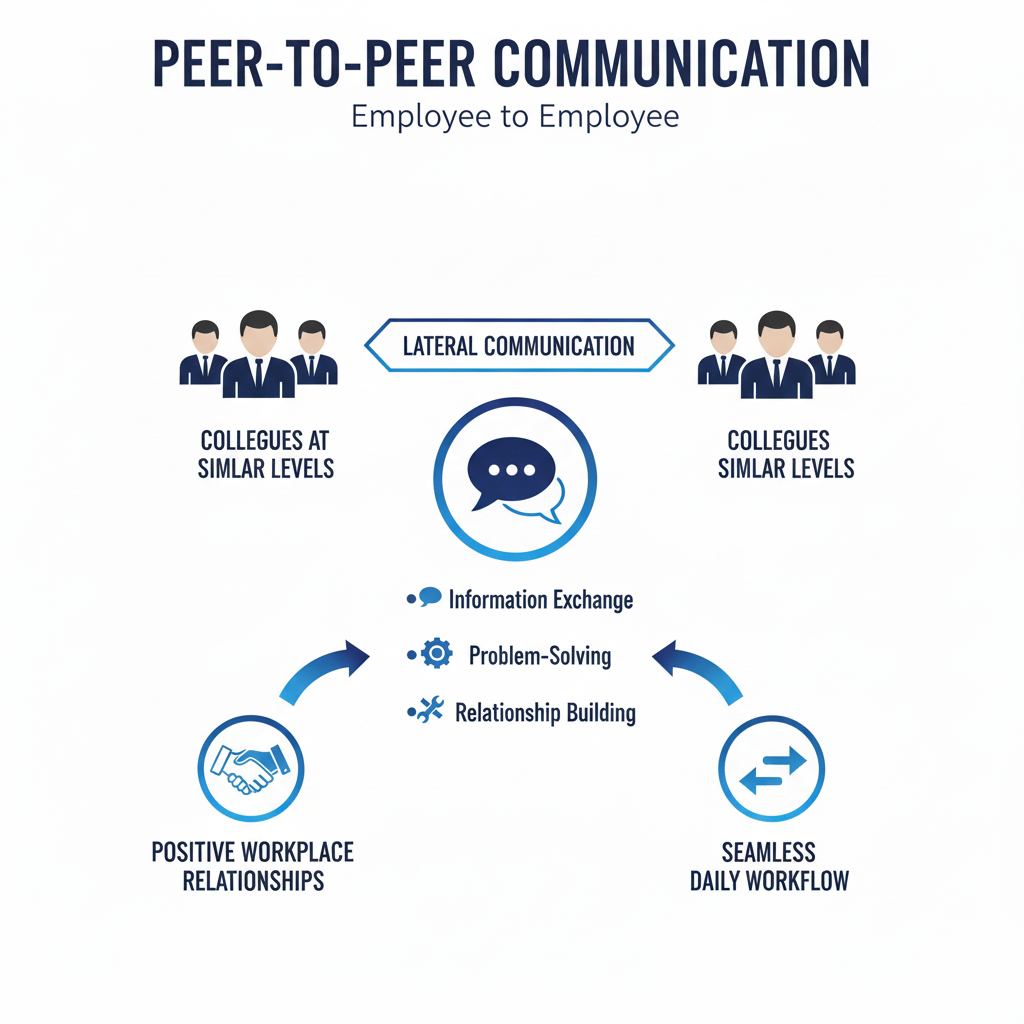
For a truly collaborative and successful company, effective working relationships among colleagues are essential. Peer-to-peer (or lateral) communication facilitates the necessary real-time information exchange, problem-solving, and relationship building between employees at similar levels. While many companies use external chat tools, providing an integrated, quick, and positive peer-to-peer channel is beneficial for developing positive workplace relationships and ensuring seamless day-to-day workflow.
5. Culture Communication
We can define culture communication as the way your company communicates with employees and shares information while keeping them engaged and motivated. This type of communication is aimed at improving the employee’s performance, productivity, and engagement to ensure business growth. Be it attracting top talent or retaining employees and branding activities, your company’s culture plays a vital role. You can build a positive company culture by implementing consistent and positive internal communication.
6. Change Communication
This specialized form of internal communication becomes critical when your organization undergoes a major transformation (e.g., technology adoption, structural reorganization, or new policy implementation). Change communication involves managing employee expectations, clarifying the reasons behind the shift, and soliciting suggestions to smooth the transition. By prioritizing clear communication during change, you facilitate stakeholders’ understanding of employee needs and expectations, ensuring a smoother implementation of new initiatives.
Also Read – 7 Tips To Manage Communication Overload At Workplace
The Key to Alignment
Internal communication is the invisible force that either propels your business forward or causes friction and delay. By consciously managing the six essential types, you create a resilient, informed, and engaged workplace.
Implementing these structured communication channels is critical, but they require the right platform. A dedicated team communication software, such as TaskOPad, facilitates these flows seamlessly. Its real-time features allow managers to delegate, monitor, and coordinate tasks easily, ensuring every type of internal communication is effective and transparent.
Don’t let communication silos slow down your success. Equip your team with the tools to connect instantly and collaborate efficiently. Book your free demo now to experience how TaskOPad transforms your internal communication strategy!