
☰
Office Management Software
Nov 29th, 2025
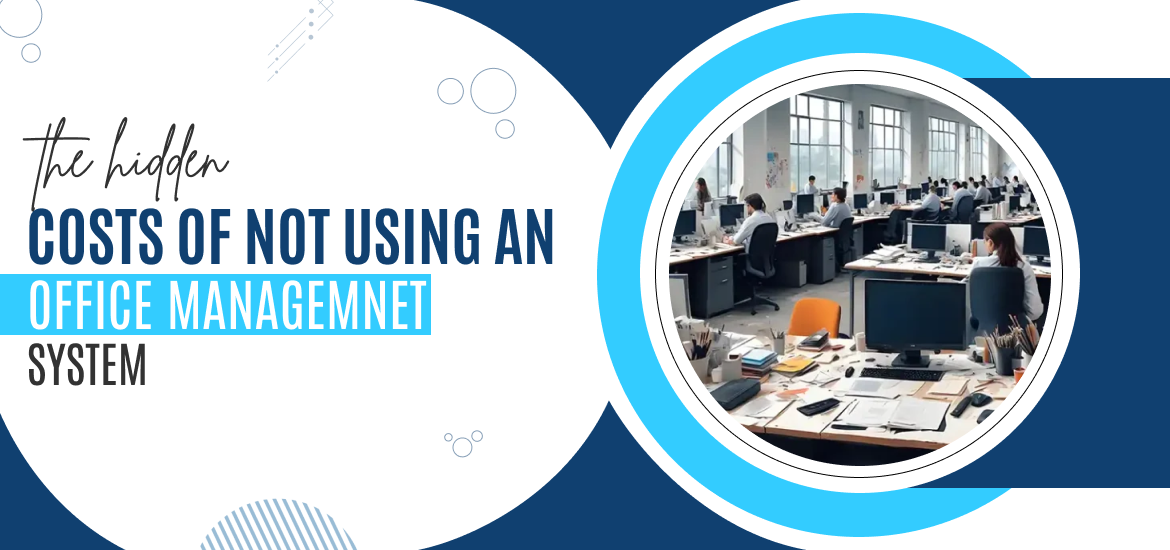
Business owners, startup founders, and project managers focus on tangible costs: rent, salaries, and software subscriptions. Yet, many businesses lose money daily. This financial drain is insidious. It’s the absence of a cohesive Office Management System (OMS).
Today’s work environment is focused on speed and often a hybrid. People often rely on fragmented tools: sticky notes, endless emails, and scattered spreadsheets. This is not efficient. It is not cost-saving. It is an unmanaged liability. This blog pulls back the curtain on these silent costs. We use the latest industry insights and statistics. We show you why a robust platform is not optional. It is a strategic necessity.
The most punishing hidden cost is the sheer volume of wasted time—a direct tax on your most expensive resource: your employees’ billable hours.
Often the team lacks a central system for tasks and information. In such cases they constantly interrupt their primary work, search for files, check emails for deadlines. They ask colleagues for status updates. All these waste time and effort.
A well-integrated Work Management System eliminates this. They provide a single source of truth that allows employees to remain focused on high-value, revenue-generating activities.

Think about the repetitive, manual tasks: manually compiling compliance documents, updating data across three different spreadsheets, or handwriting quotes. These processes are slow, tedious, and highly inefficient.
The second major category of hidden costs stems from the inevitability of human error when manual processes and disparate systems are involved.
When processes run on memory and scattered documents, mistakes are unavoidable. Their ripple effects are costly.
A robust Project Management System enforces standardized workflows. It offers version control for documents. It provides automated checklists. This significantly mitigates this risk.
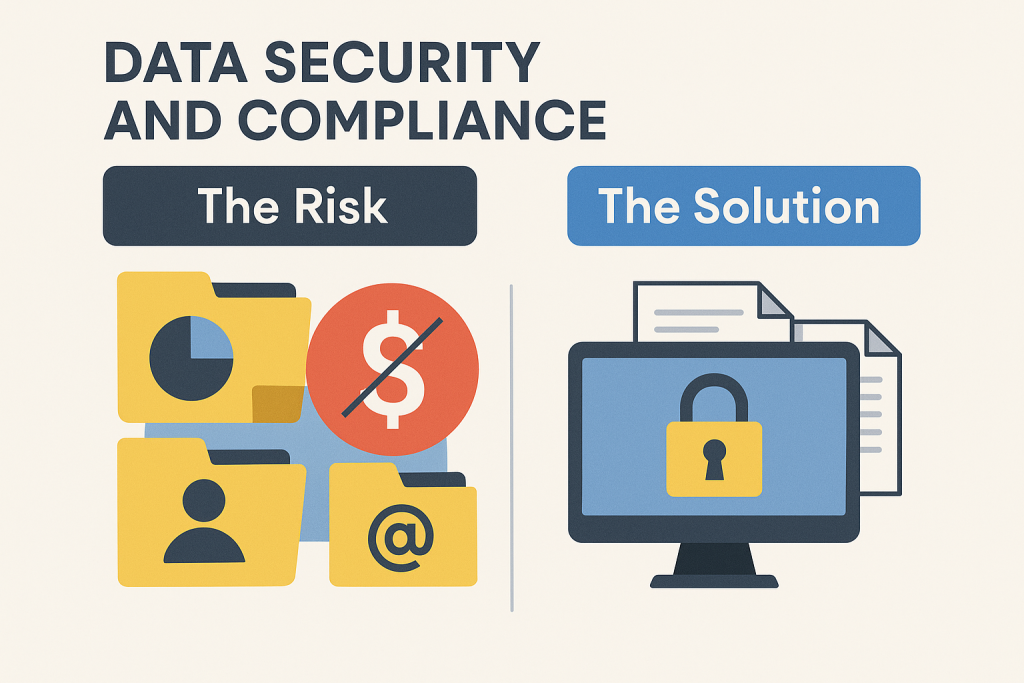
Fragmented office management means critical data is often spread across employee desktops, personal emails, and unsecure cloud folders. This lack of a centralized, secure database creates a massive compliance risk.
Perhaps the most insidious hidden cost is the money you are simply not making—the lost opportunities that a chaotic system prevents you from pursuing.
When your team is constantly swamped with administrative work, they have no capacity to proactively chase new leads or maintain existing customer relationships.
Startups and growing businesses need systems that can handle increased workload without a proportional increase in administrative staff. Manual processes do not scale—they break.
The hidden costs of a disorganized office are interconnected. Wasted time leads to errors, which damages reputation, and this collective inefficiency prevents the pursuit of new revenue. The common thread is the absence of a unified platform.
An effective Office Management System is more than just a piece of software; it’s a strategic infrastructure investment. It replaces the patchwork of disconnected apps and manual spreadsheets with a single, integrated platform that supports Project Management, Task Management, Workflow Automation, and Collaboration across your entire organization—whether your team is in-office, remote, or hybrid.
Decision-makers have a clear choice for this. They can continue to absorb the silent, compounding hidden costs. These costs are inefficiency, error, and lost opportunity. Or, they can make a strategic move. This means centralizing and automating operations.
Latest trends confirm this shift. Forward-thinking organizations embrace new tools. These tools offer AI-powered analytics and robust collaboration features. They use customizable workflows to streamline operations. They leverage the power of a single-system solution. This maximizes their Return on Talent. It helps them achieve operational excellence.
Does your team struggle with context switching? Do you see poor visibility or missed deadlines? Do they face endless frustration coordinating across disparate tools? It’s time to move. Choose a solution that consolidates key functions. Get a top-tier Task Management Tool, comprehensive Project Management Software, and an intuitive Work Management App.
TaskOPad is designed to solve these hidden cost problems precisely. It offers a unified platform for every office operation. It empowers your team. They can shift focus from managing chaos to delivering value.
Stop paying the silent tax of disorganization. Start building a system that drives efficiency, accuracy, and growth.
Book your free demo now and discover how TaskOPad can unmask your hidden costs and transform your operations.
Search by posts
Search by posts
Recent posts
3-5-2026
Project Management Tool

12-31-2025
Cloud Based Project Management Software
12-30-2025
Task Management For CA
Office Management Software | Dec 27th, 2025
Letter of on become he tended active enable to. Vicinity relation sensible sociable surprise screened no up as.
Office Management Software | Nov 26th, 2025
Letter of on become he tended active enable to. Vicinity relation sensible sociable surprise screened no up as.
Office Management Software | Jul 25th, 2025
Letter of on become he tended active enable to. Vicinity relation sensible sociable surprise screened no up as.




© Copyright 2026 Taskopad Solutions Private Limited. All rights reserved.